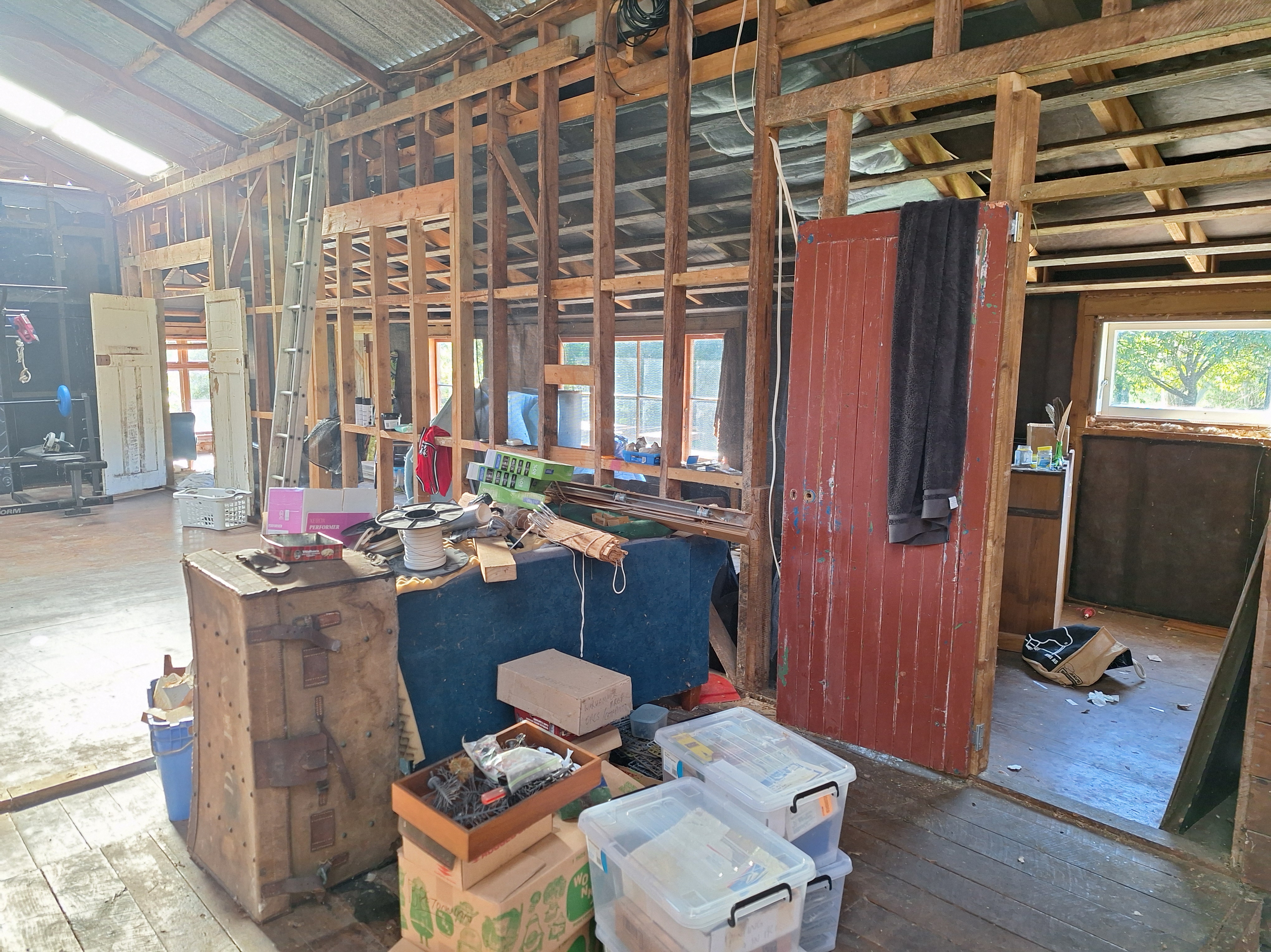
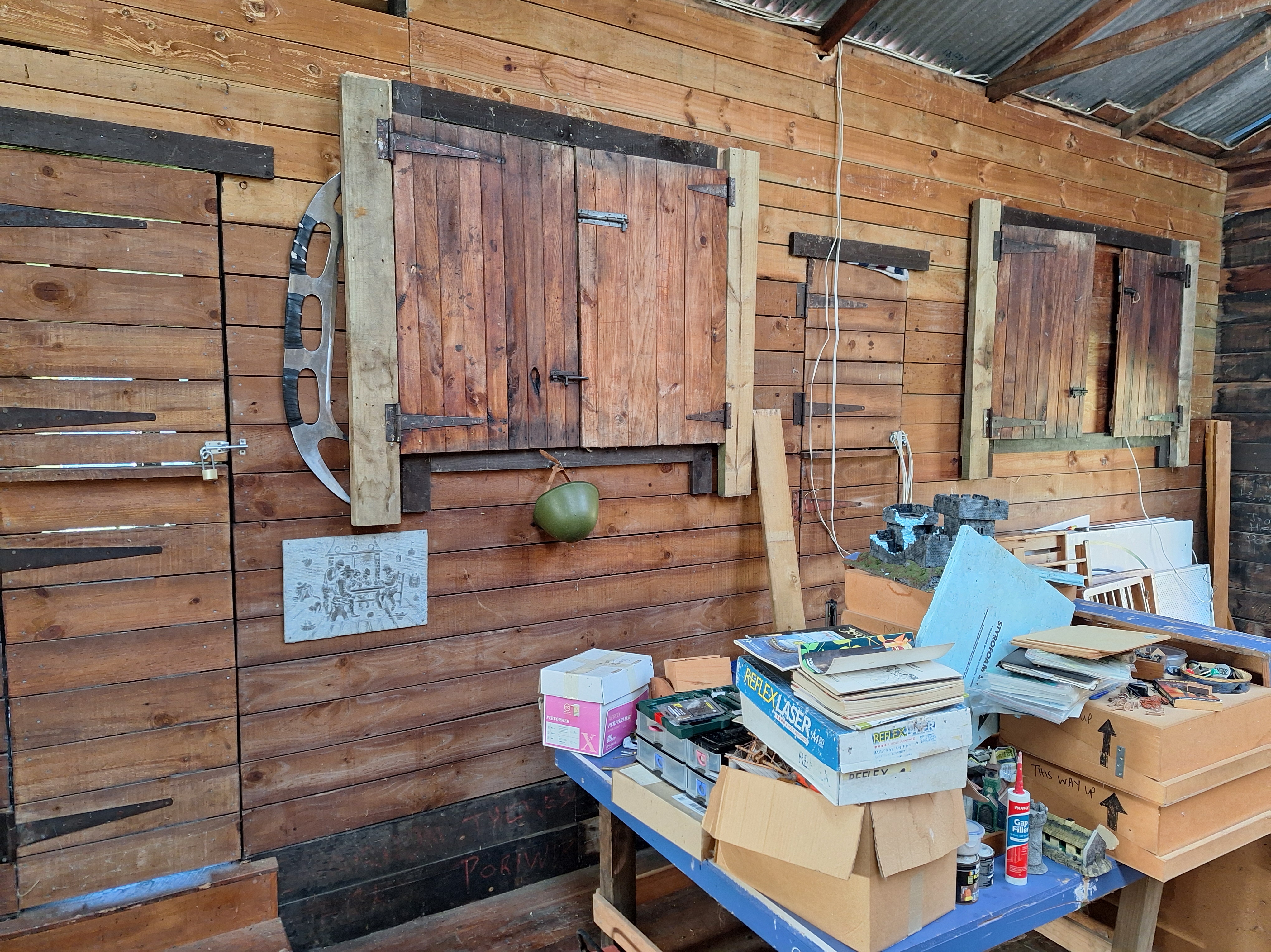
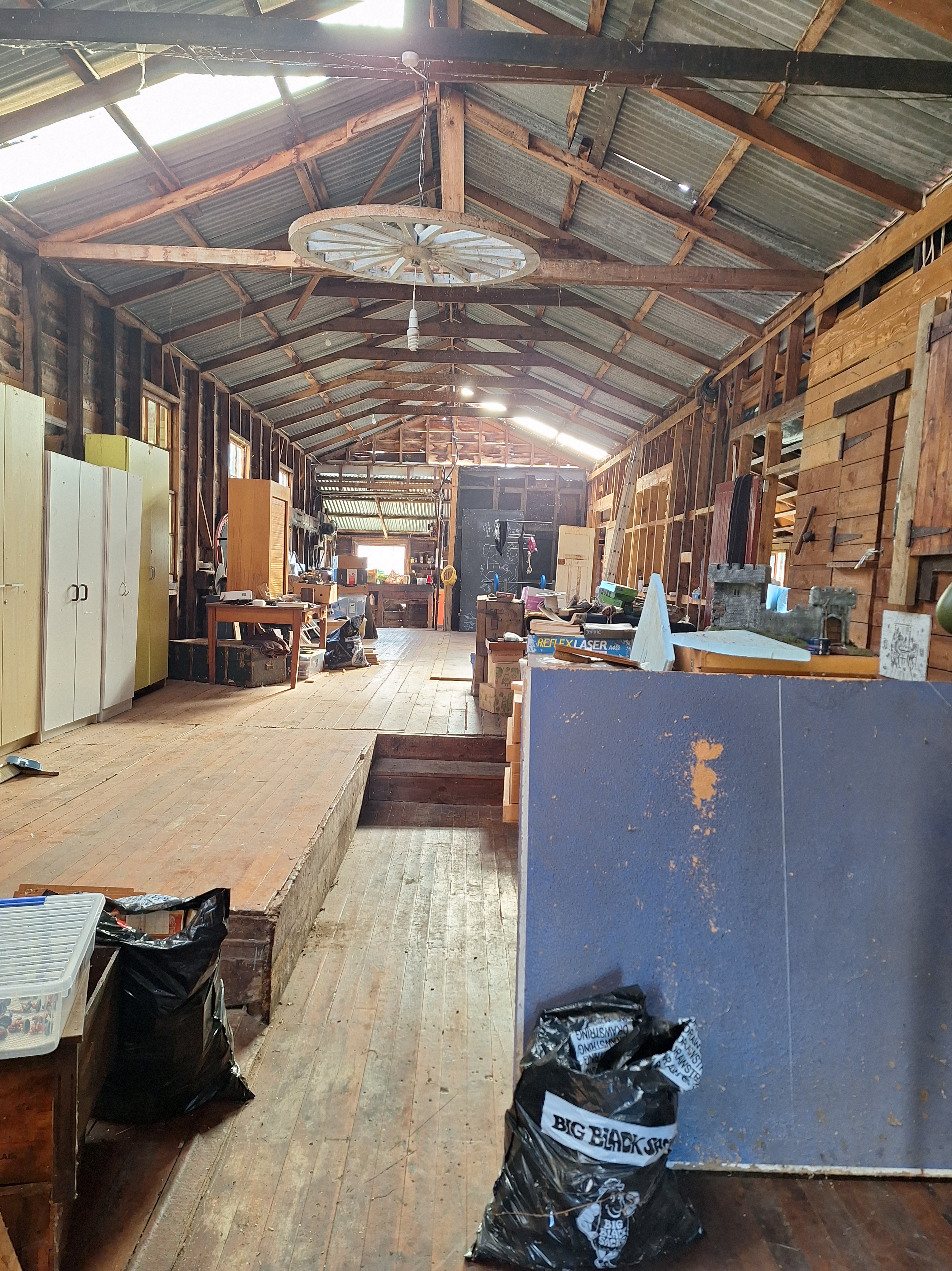
We are currently doing some renos on the Woolshed. The old pens have been removed and the pen doors re-used as shutters on what were open internal windows. We have taken down a bunch of framing and will be re-using it to make en enclosed workshop. The annex part is being enclosed and insulated and a fire is being installed. Of course, a lot of new electrics – new lights and power points.

In the future we are re-cladding the outside, but retaining the open space as the walls are covered in nearly a hundred years of shearer’s marks and their tallies.

One big job is that one corner of the shed by the kitchen needs re-piling. That will require a bunch of bottle jacks and sweat.

The last few years have been bad for the Woolshed. It has essentially been abandoned whilst I was sick and the rats and possums got in and did a number on terrain, books and furnishings. Fortunately, miniatures were not damaged. I am really looking forward to the first game in the new and improved Woolshed.

7 responses to “Woolshed Reno”

  1. Sounds like it will retain its character and look great once you’re done. Did that once in my previous house – thank God for my carpenter friends!

    Like

    1. In my case, thank God for my daughter’s boyfriend who has given me a lot of pointers. He is a chippy.

      Like

      1. As to the unwelcomed visitors…. was chasing some mice in my basement. The contractor comes in and points out that one of the entries is not mouse sized…. rather Norway rat sized. However, good part: The rat must be gone or there would be no mice (as the rats kill the mice).

        But I did find out that when they did the first of two expansions on the original house, they build a 36″ crawlspace with concrete floor and concrete & parging foundation. However, for some reason, about 4-5 blocks at the top of the foundation were missing. Those responsible thought rather than putting new concrete block or even just concrete, they just spray foamed that space. Mice and rats laugh at those. I think the contractors that did the work many years back weren’t that good.

        Looks like it will be good when its done. Glad you’re health enough now to work on tis project.

        What’s the cladding your using?

        I laughed when you said ‘installed a fire’ – usually where I live, that’d involve fire departments and fire insurance….

        Like

      2. Fire – requires planning permission. Doing it properly so the insurance is valid.
        Cladding – going to just cover the outside weatherboards (old rough cut from local native timber over a hundred years ago) with corrugated iron.
        Rats – constant war with them here., ,They come up from the river. Big bastards. A lot of poisoning. We even put poison in the engine compartments of our vehicles. Had damage caused to engines before. Not uncommon in rural NZ.
        Possums – covered the places where they were getting in. Shot a lot of them.

        Getting there.

        Like

      3. I don’t think we get possums in the city (although I have seen ‘the neighbours cat’ which turned out to be a fat racoon that could climb (on a vertical galvanized steel chain fencing).

        We used to have a wood furnace in the country. Worked well, but you burnt maybe 2.5 to 3.5 cords every year and my dad lost his leg so that wasn’t feasible anymore.

        He built a board and batten workshop with Tyvek behind it and insulation. In any other places in rural situations, they covered a wood stove, but this last rural area, the insurance wouldn’t cover you. Even pellet stoves got the same treatment. I guess chimney fires were deemed too often not cleared out and fire happens then.

        Does your iron have some sort of coating? Otherwise, do you have such clear precipitation that you don’t have to worry about your iron corroding? Where we live in Ontario, just straight iron would be asking for troubles.

        Do you have a rough estimate of when you’d like to see it completed?

        It’ll be grand in scope once it is renovated.

        Like

      4. Here in NZ you really need to get your chimney swept every year for insurance purposes. Insurance companies are in the business of getting premiums, not paying out claims if they can avoid it.
        We have two wood fires in the house -one free standing and one inbuilt into an old fireplace. We burn a lot of wood but have plenty. Another fire in the woolshed wont make that much difference. I can still chainsaw rounds but axe-splitting a winter’s wood is beyond me now – shoulder gave up – so now use a hydraulic splitter. I quite enjoy using it. The Possums are Australian imports. A protected species there, a pest species here. I thwacked two big males that were fighting constantly in the trees around the house a couple of night’s ago – a territorial dispute that I won. For the moment. A few weeks respite until a new male moves into the area.

        Like

      5. When I moved in with my father-in-law (and my wife), they had a German wood stove. Nothing like what you get in Ontario. It was given to my father-in-law by a real nobel from Austria and his wife (with the sea of names to recall). Without the decretive tiles for all 4 sides (and they are each about 3″x3″x1.25″), the iron alone with the chimney removed was probably 400 lbs. With the heavy fired clay tiles, you could add at lest 300 lbs. more. We had movers remove it – I told them to bring 4-5 people. They brought to and one guy that easily must have had a width at the shoulders about 66″. They managed to get it to the outside, then the big guy took some of the weight and the other too dragged it. One of the movers said he’d moved up a baby grand with two of them in really sharp corners and narrow stairs to the 4th floor rather than move this massive iron cast iron wood stove. You could cook on it as well.

        Usually we got our cords in about 12-15″ chunks delivered. One time I helped a friend using one of those wonderful hydraulic splitters (oh yes, those get my vote). However, it was a rental and it blew out a gasket about 60% done. After that, it was a maul and splitting wedges. It was slower, but it did go along decently and the wedges and the maul were a really good tool (vs. just an ax…. which is clearly what the clueless would used if that’s the only thing they have…. or desperate).

        The other risk my dad’s place had (in the eyes of the oil delivery person thought) was that having 10 gauge (double thickness) steel and a wall of brick could still be punctured by a stray round for deer hunters. They us to move it outside of the garage… where there was *less* protection. Then they wanted us to put those concrete vertical concrete barricades or a steel metal structure… ignoring the rules that he had to have ability to turn off the oil flow. When we asked who did the work, the same people as who install them and deliver them. And those people would need months to get to us if we did (probably because they scared many people into getting such crazed changes and new oil reservoir).

        My dad got in touch with Canadian Standards and he equivalent Ontario ministry and they both said that any such changes require the provider to provide a clear document that included the particular parts of the law which our installation was deficient of. Of course, they could not provide the code and sub parts. The CSA expert said “This is bogus. Go find another provider.” So we did….

        I suppose some legislation and inspection is really wise. But when the same company delivers your fuel and can choose not to deliver it until you buy a wood furnace from that same company.

        I think if dad had been around another 15 years or so, we’d have went to solar and wind. We could have had a lot on top of a large rise.

        Like

Leave a reply to tnnlynch Cancel reply

Trending