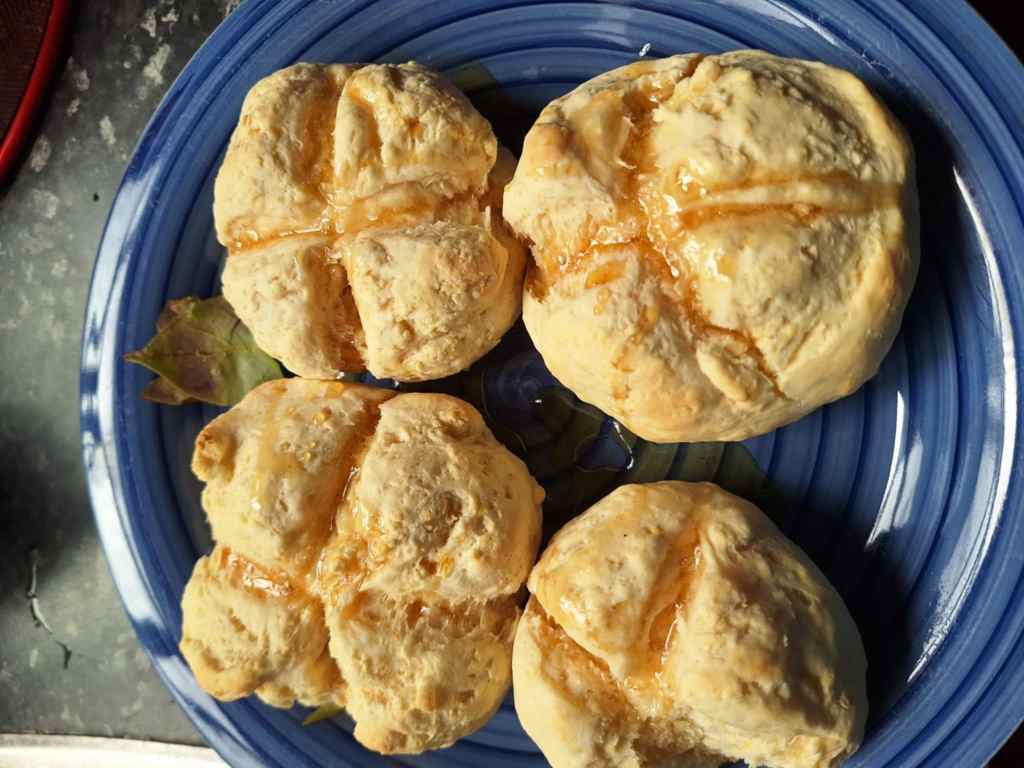
Next time you are having friends over for a game of Hail Caesar, try making some of these. Add some authenticity to your gaming session.
The recipe comes from De Agri Cultura, written about the 2nd century BCE by Marcus Porcio Cato. Made with honey they are an offering to Bacchus.
Original text:
Libum hoc modo facito. Casei P. II bene disterat in mortario. Ubi bene distriverit, farinae siligineae libram aut, si voles tenerius esse, selibram similaginis eodem indito permiscetoque cum caseo bene. Ovum unum addito et una permisceto bene. Inde panem facito, folia subdito, in foco caldo sub testu coquito leniter.
Translation:
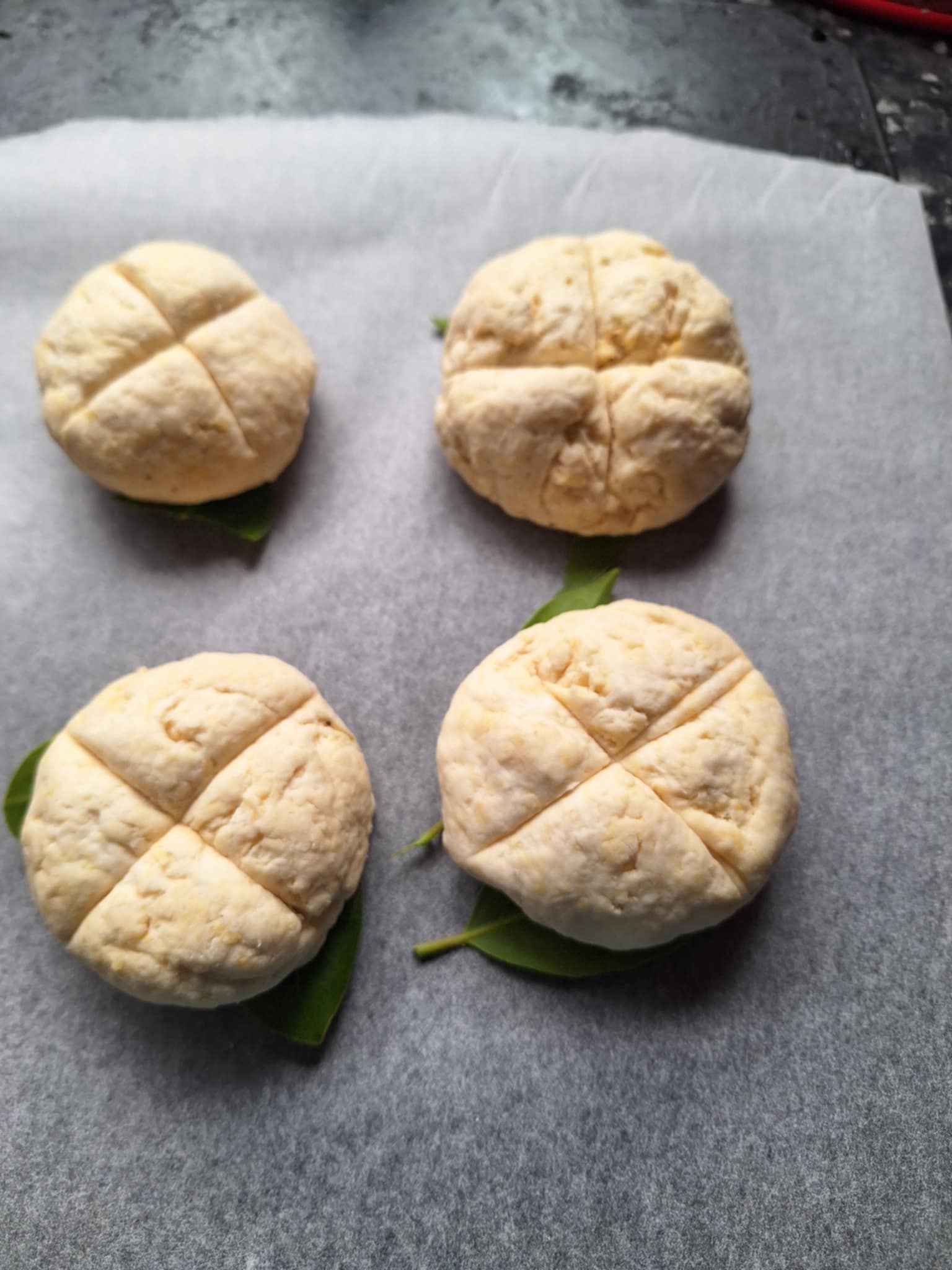
Make libum in this way. Pound well in the mortar two pounds of cheese, then add one pound of superfine flour or, if you want a libum more tender, half a pound, mixing well with the cheese. Add one egg and mix well. Shape the bread, placing it on bay laurel leaves. Cook at low heat in the hearth covering with the testum.
A testum is some type of clay oven thing. I used the electric one we already have in the kitchen.
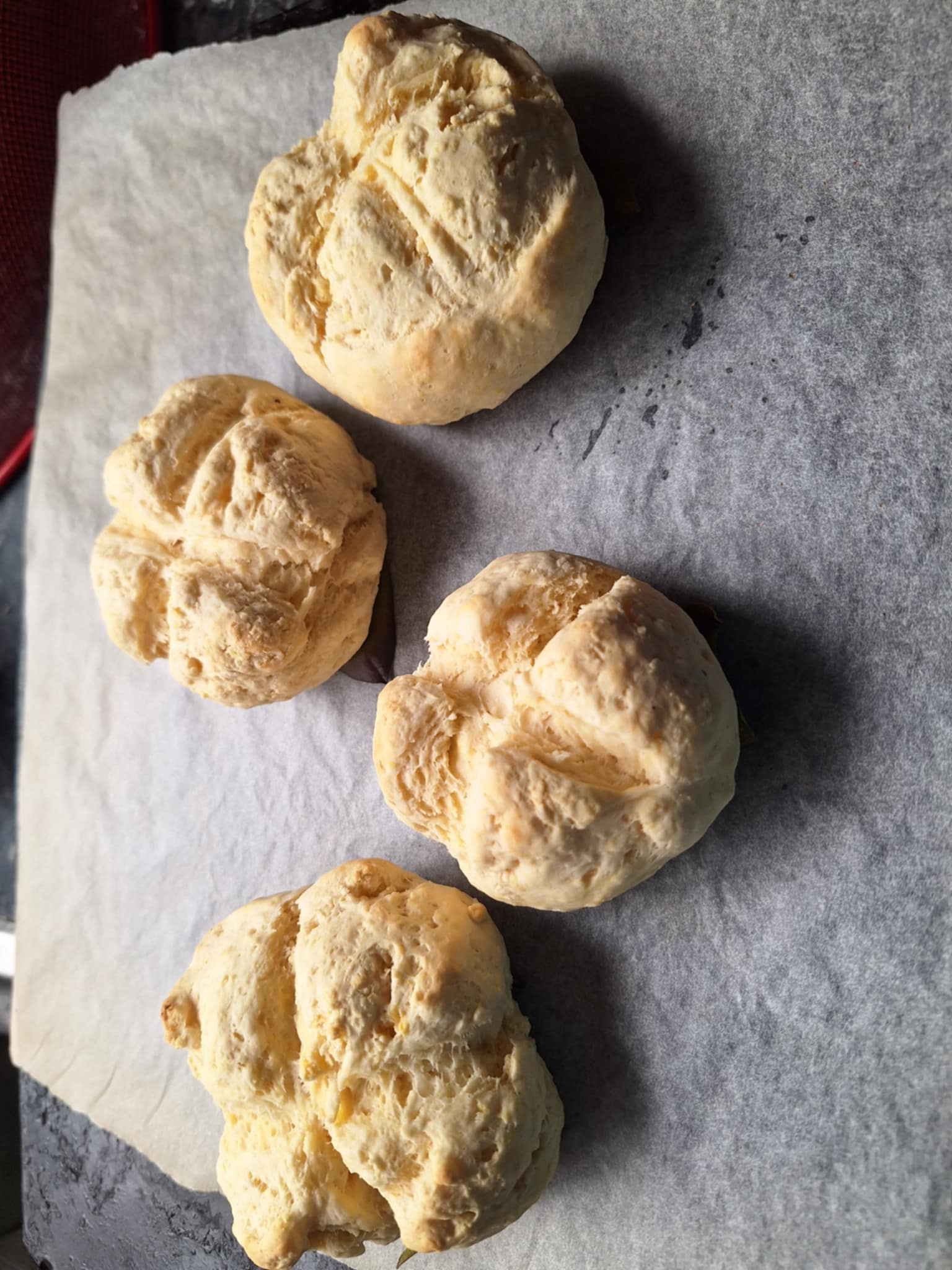
I used 250g self raising flour, 250g ricotta, a pinch of salt and an egg to make the dough. Place the formed dough on a bed of bay leaves and bake in a moderate oven until cooked. Next time I will brush some milk over the dough to get a better golden colour. I drizzled honey over the cakes after they came out of the oven.



 The Woolshed Wargamer
Leave a comment